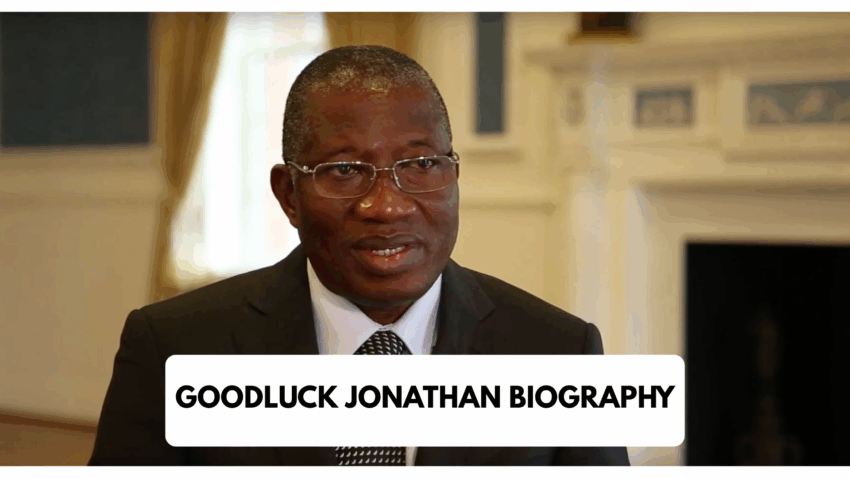
Goodluck Ebele Azikiwe Jonathan is one of Nigeria’s most recognizable modern political figures — rising from a riverside village in Bayelsa State to become vice-president and then president of Africa’s most populous country.
His presidency (2010–2015) was marked by notable economic and infrastructure initiatives, serious security challenges, and controversial allegations of corruption.
This biography traces Jonathan’s early life, education, political rise, time in office, post-presidential roles, and the legacy he leaves behind.
Early life and education
Goodluck Jonathan was born on 20 November 1957 in Otuoke, a riverside community in Ogbia Local Government Area of what is now Bayelsa State. He grew up in a modest Ijaw fishing family and attended local schools before studying zoology at the University of Port Harcourt, where he later completed a master’s degree and a doctorate in the field. His academic background as a zoologist and as an educator is a recurring theme in his story — he worked as a teacher and in environmental roles before entering politics.
Entry into politics and rise in Bayelsa State
Jonathan’s political career began in the early return to civilian rule in 1999. He served as Deputy Governor of Bayelsa State from 1999 to 2005, then became Governor of Bayelsa (Dec 2005–May 2007) after his boss, Diepreye Alamieyeseigha, was removed from office. His reputation in Bayelsa as a conciliatory figure and technocrat helped him secure a national profile within the ruling Peoples Democratic Party (PDP).
Vice-presidency and accession to the presidency
In 2007 Jonathan was chosen as running mate to Umaru Musa Yar’Adua and became Vice President (2007–2010). After President Yar’Adua’s prolonged illness and eventual death, Jonathan initially assumed the role of Acting President in early 2010 and was sworn in as President on 5 May 2010 following Yar’Adua’s death. His steady hand during the constitutional transition helped calm a potentially explosive period in Nigerian politics
The 2011 election and mandate
Jonathan ran for the presidency in his own right in 2011 and won, claiming a full democratic mandate to continue reforms and development projects begun under his administration. The 2011 contest and victory consolidated his position nationally, though political divisions and ethno-regional tensions remained important factors in governance.
Major policies and achievements
During Jonathan’s presidency his administration pursued several visible infrastructure and economic initiatives:
- GDP rebasing (2013): Under his administration Nigeria’s GDP was rebased, and the country was declared the largest economy in Africa (based on revised GDP figures). This rebasing reshaped global and regional views of Nigeria’s economic scale.
- Infrastructure projects: The Jonathan years saw investments in rail rehabilitation, road projects, and airport upgrades. Programs like SURE-P (Subsidy Reinvestment and Empowerment Program) were created to channel savings from subsidy reforms into infrastructure and social spending.
Security challenges: Boko Haram and national unrest
A defining and tragic problem of Jonathan’s presidency was the rise and expansion of Boko Haram, the Islamist insurgency based in northeastern Nigeria. Attacks, mass abductions, and the humanitarian fallout placed huge pressure on his government’s credibility and capacity to protect citizens. International observers and domestic critics repeatedly pointed to shortcomings in intelligence, military preparedness, and political prioritization of the insurgency.
Controversies and corruption allegations
Jonathan’s administration faced serious allegations of corruption and mismanagement. Investigations, audits and media reports after his tenure highlighted large missing sums in oil revenues and public accounts, and several high-profile ministers and associates were accused of financial misconduct. These controversies greatly shaped public perceptions of his government and complicated assessments of his achievements.
The 2015 election and historic concession
In the 2015 presidential election Goodluck Jonathan was defeated by Muhammadu Buhari. Notably, Jonathan conceded defeat promptly and authorized a peaceful transfer of power — a move widely praised domestically and internationally as a watershed moment for Nigerian democracy.
Post-presidency: foundation work and diplomacy
Since leaving office, Jonathan has remained active in regional diplomacy and civic initiatives. He established the Goodluck Jonathan Foundation, which promotes democracy, good governance and development. He has also served in various mediation and envoy roles — for example, as an ECOWAS special envoy in Mali — and continued to engage with international institutions on issues of democracy and conflict resolution.
Personal life
Goodluck Jonathan is married to Patience Jonathan; the couple have children and have maintained a visible public profile since his time in office. Patience served as Nigeria’s First Lady during Jonathan’s presidency and was herself a controversial figure in some public debates.
Legacy: mixed and contested
Jonathan’s legacy is complex. Supporters point to his peaceful transition out of office, GDP rebasing, and infrastructure pushes. Critics point to security failures and pervasive corruption scandals. For many analysts, his tenure is a study in how modernization efforts, institutional weaknesses, and entrenched patronage networks in Nigeria interact — producing both progress and setbacks.
Frequently Asked Questions (FAQs)
When and where was Goodluck Jonathan born?
He was born on 20 November 1957 in Otuoke, Ogbia, Bayelsa State (then Eastern Region), Nigeria.
What is Goodluck Jonathan’s educational background?
Jonathan studied zoology at the University of Port Harcourt, earning advanced degrees and later a doctorate; he worked as a teacher and in environmental roles before entering politics.
When did Jonathan become president of Nigeria?
He became acting president in early 2010 and was sworn in as president on 5 May 2010 after the death of President Umaru Musa Yar’Adua. He won election in his own right in 2011.
Why is Jonathan’s 2015 concession important?
His quick concession and orderly handover after losing the 2015 election marked a rare peaceful transfer of power from an incumbent to the opposition in Nigeria and was widely praised as strengthening democratic norms.
What were the main criticisms of his presidency?
The main criticisms include the administration’s handling of the Boko Haram insurgency, and multiple allegations of corruption and mismanagement of oil revenues.
Conclusion
Goodluck Jonathan’s life is a story of dramatic ascent: a boy from a riverine community who became Nigeria’s president. His time in office generated real economic and infrastructure achievements and simultaneously exposed Nigeria’s governance and security weaknesses. Ultimately his decision to accept electoral defeat peacefully stands as a significant moment in Nigeria’s democratic development — even as debates over accountability, reform, and the long-term impact of his policies continue. Whether judged kindly or harshly, Jonathan’s presidency reshaped modern Nigerian politics and remains an essential chapter in the country’s history.